Cases · App check
An online shop built with AI, checked and fixed
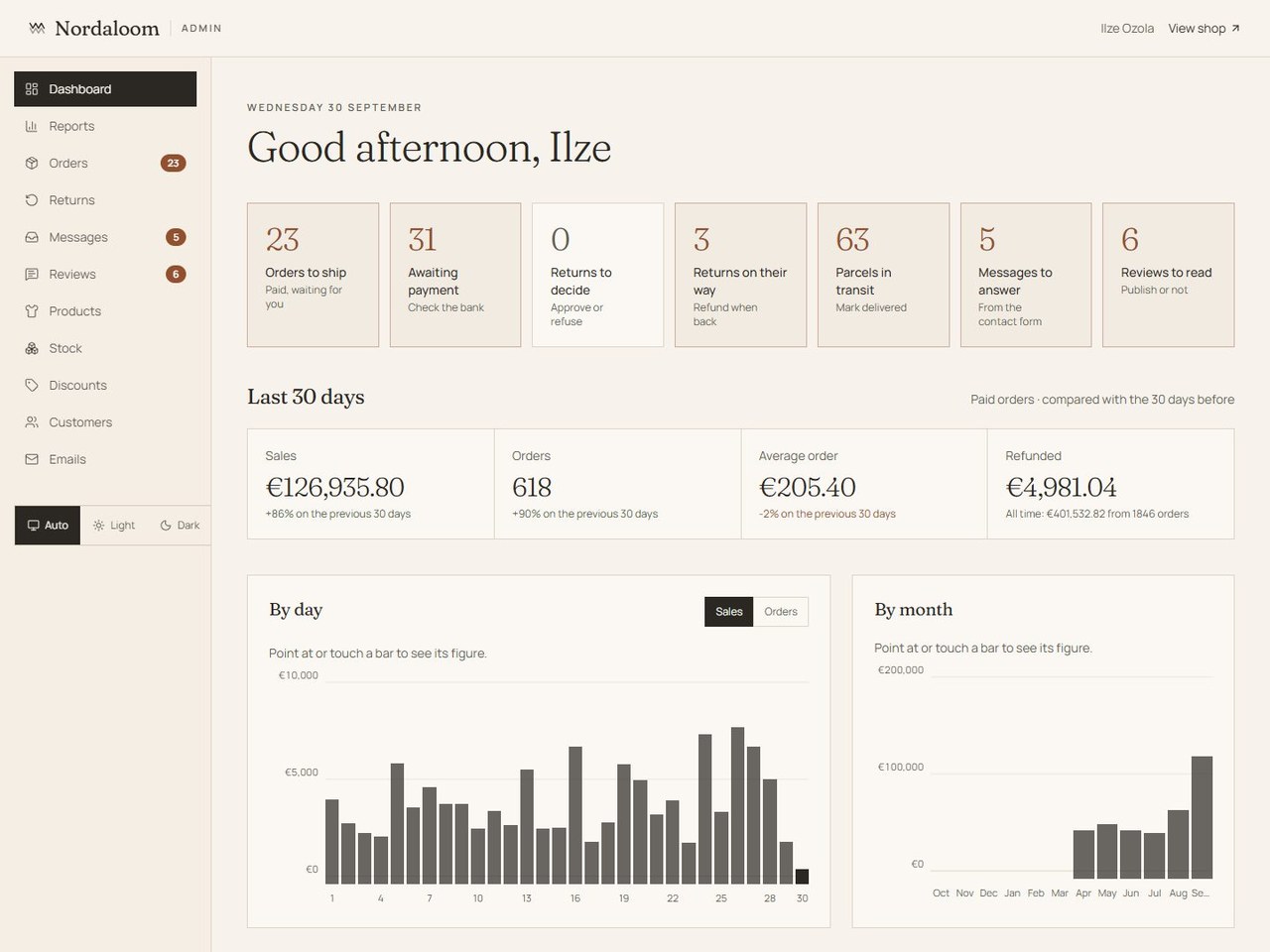
A sample engagement: the shop is fictional and holds test data. It was built with Claude Code for this case; every finding, test and fix is a real run. The fixed shop is live, so you can open it yourself.
Where it stands
Fixed
Every critical, high and medium problem and 10 of the 14 low ones: 24 of 28. Of 51 tests, 42 failed on the shop as received and none fail on the fixed one.
Still open
4 low ones, left to the owner with the reasons, such as two reports that give different totals under the same label. The last round of fixes left a few low points too; they are listed in the report.
Before real customers
Create the owner's account and switch email confirmation on before the shop opens: on a fresh database, whoever signs up first with the owner's address becomes the owner. It is rated low because it exists only in that window, before the owner's first sign-in. Also set the limit per visitor on the host, and try the shop on a real phone.
Open the shop yourself
Open the live shop →The fixed shop runs on Supabase cloud in the EU, with pages on Cloudflare and card payments in Stripe test mode: card 4242 4242 4242 4242, any future date, any CVC, and no money moves. Sign-ups are closed, so use one of the two demo logins. Everything resets every night, so use made-up names.
Demo logins
- Customer:
customer@demo.nordaloom.example/knit-customer - Owner (admin at /admin):
owner@nordaloom.example/knit-owner
Checked again once it was live
- The built pages carry only the public key: no secret key and no source maps.
- Signed out, the catalogue reads and nothing private does; every write is refused.
- Stripe's notices reach the shop at its real address with a valid signature; an unsigned one is refused.
- A test card payment marks the order paid, a cancellation refunds it, and the worst findings stay fixed on the live shop.
On the live shop the check found 1 medium (the http address didn't move to https) and 3 low; all were fixed.
The case
Goal
Apps built by describing them to an AI look finished long before they are safe to take money. The question: what does a check find in a shop that passes a normal walk-through and that its builder handed over as done?
Challenge
Where people usually look, the shop held up: prices, stock and totals were right, and nobody without an account could read customers' data. The builder's own answers said "Orders can't be placed twice". What was wrong showed only off the normal path: a new account typing someone else's order number, a dropped connection, a slipped digit in an amount, two things happening at the same moment.
Solution
A copy of the shop ran locally on test data, with card payments against Stripe in test mode. It was checked from outside with only its public key, through its code and database, as the owner and customers in a browser, and installed as an app in a phone-sized browser and taken offline. Every finding became a test that fails on the shop as received; each fix was reviewed independently before the next, until a review found nothing above low.
Outcome
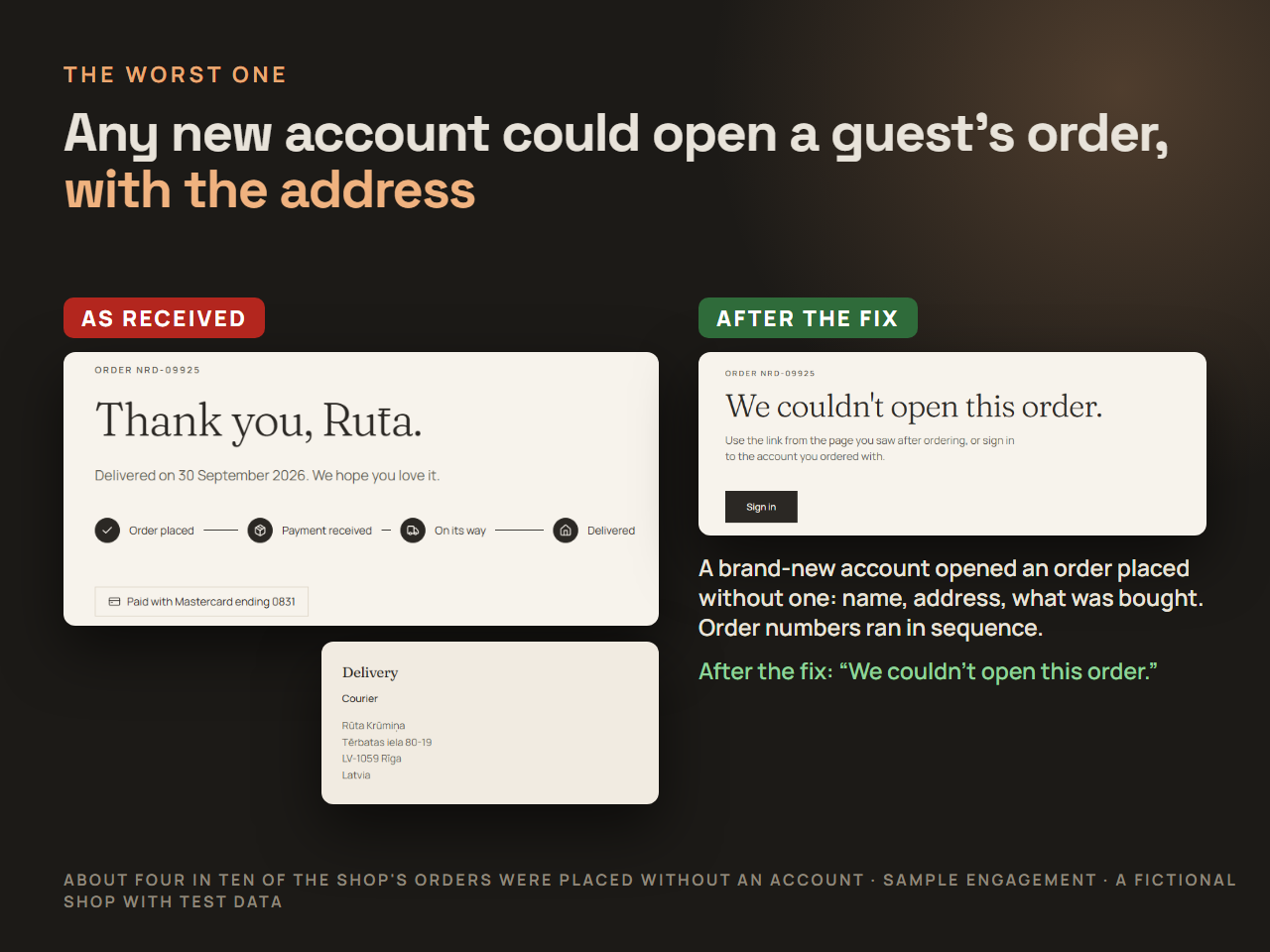
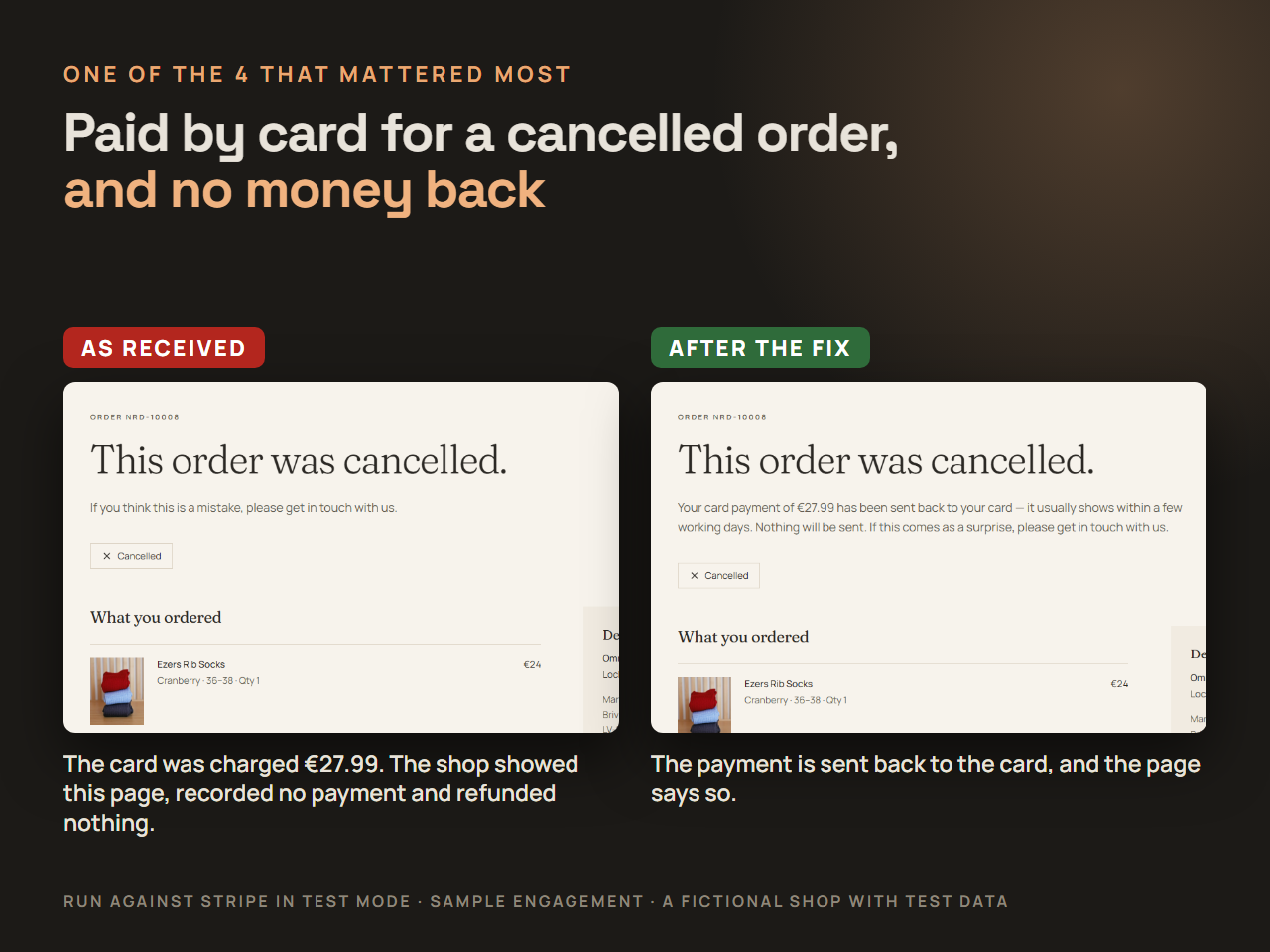
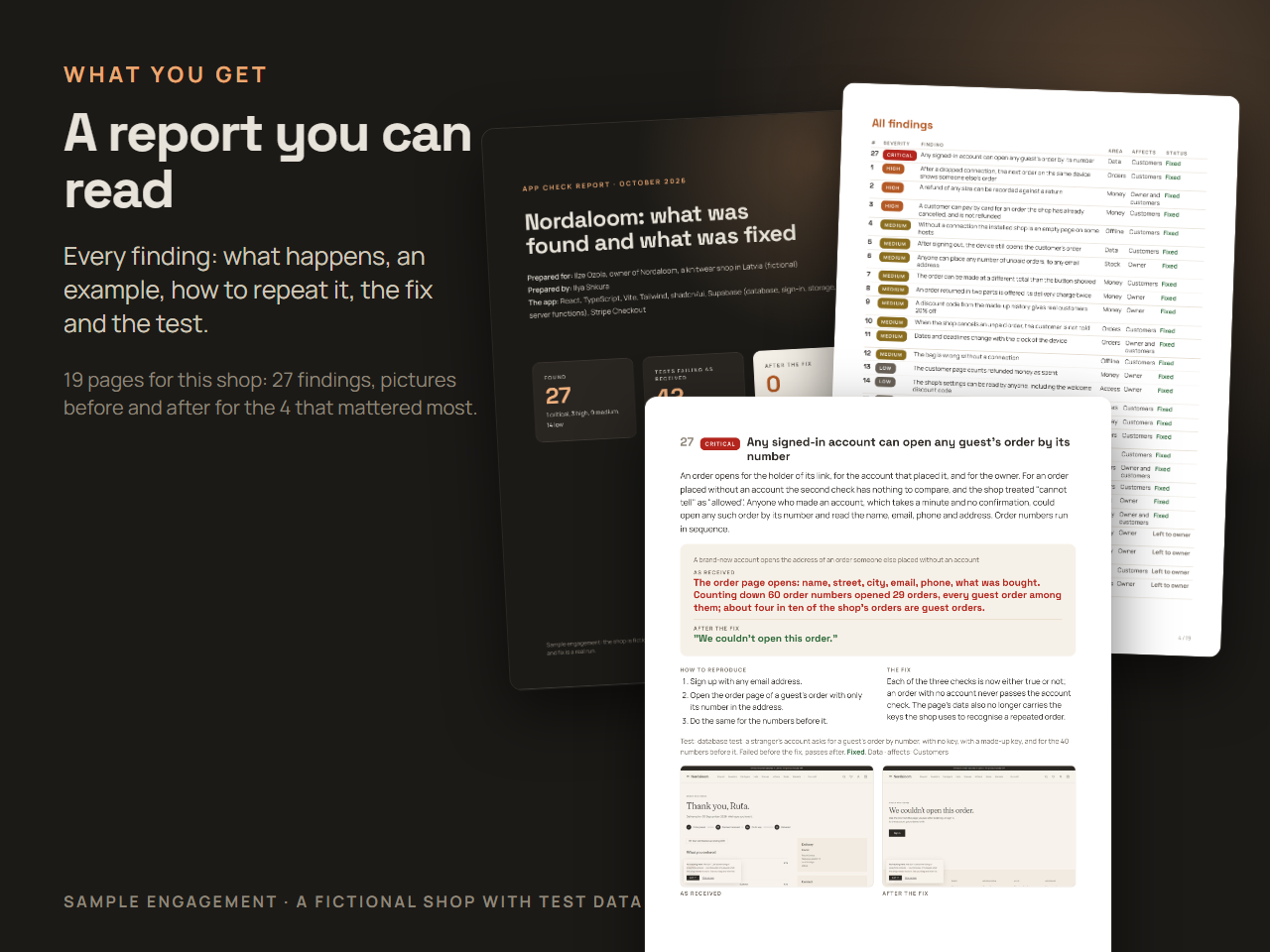
28 findings: 1 critical, 3 high, 10 medium, 14 low. Any new account could open an order placed without an account by its number and read the name, address, email and phone; order numbers ran in sequence, and about four in ten orders were guest orders. After a dropped connection the next customer on the same device was shown someone else's order; the owner could record a €500 refund on a €29.99 order; a customer could pay €27.99 by card for an order already cancelled and not get the money back; the newsletter form would send the shop's email to any address, any number of times. 42 of 51 tests failed on the shop as received, none after the fixes. 24 findings are fixed; 4 low ones are left to the owner, with the reasons. The reviews of the fixes found more, part of it brought by the fixes themselves; those rounds are outside these numbers. One shop, built once: the numbers describe this shop, not a rate for apps built this way.
The code
github.com/5eBeKs/nordaloom-case
One finding in full, guest orders open to any account: the order function before and after the fix, the test, and its runs on both versions.
From the case
The report, 22 pages (PDF)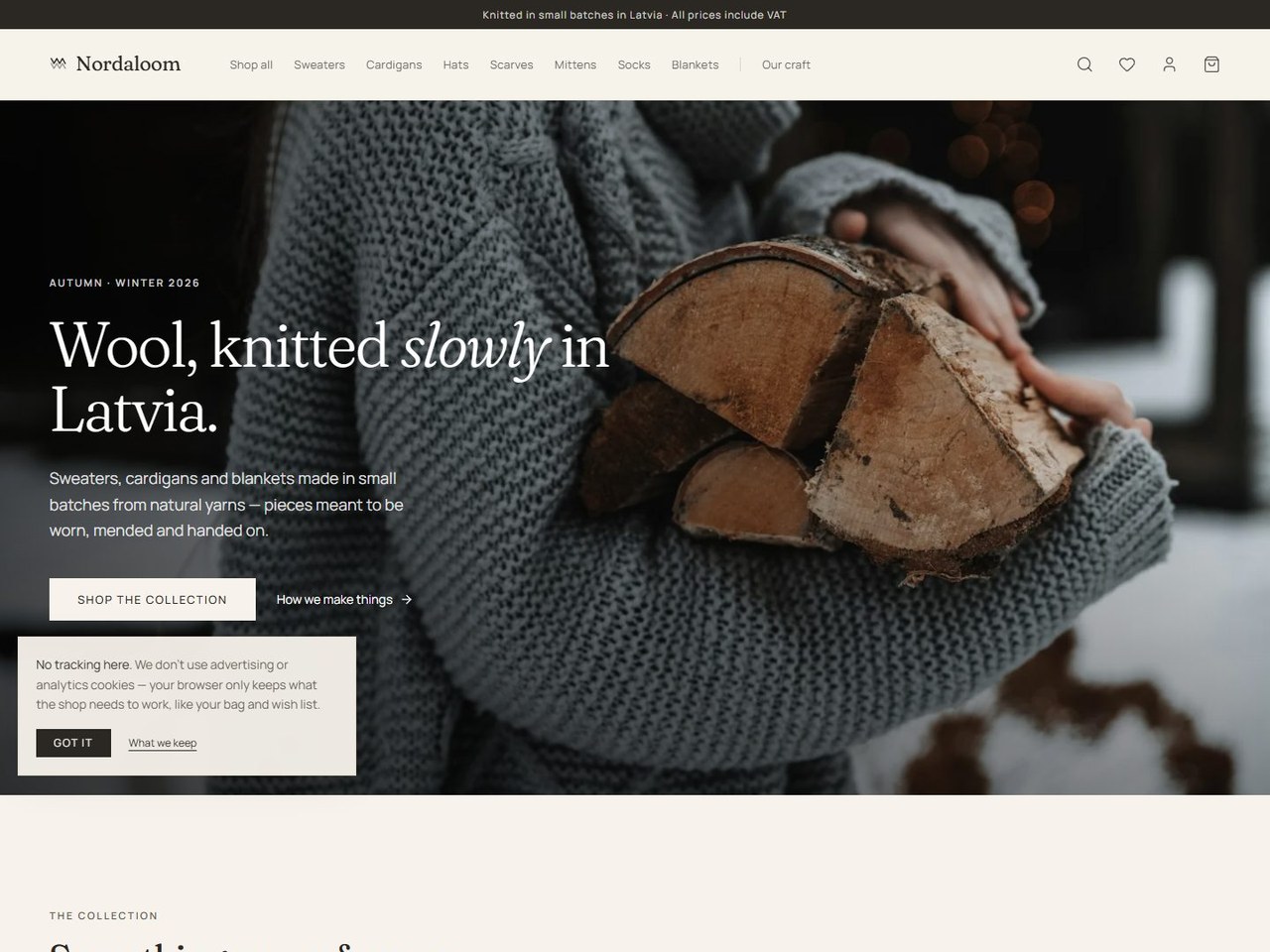
Service
The same check for your app
You send the code, not your passwords. Every problem found becomes a test, and every fix is reviewed for what it broke.